
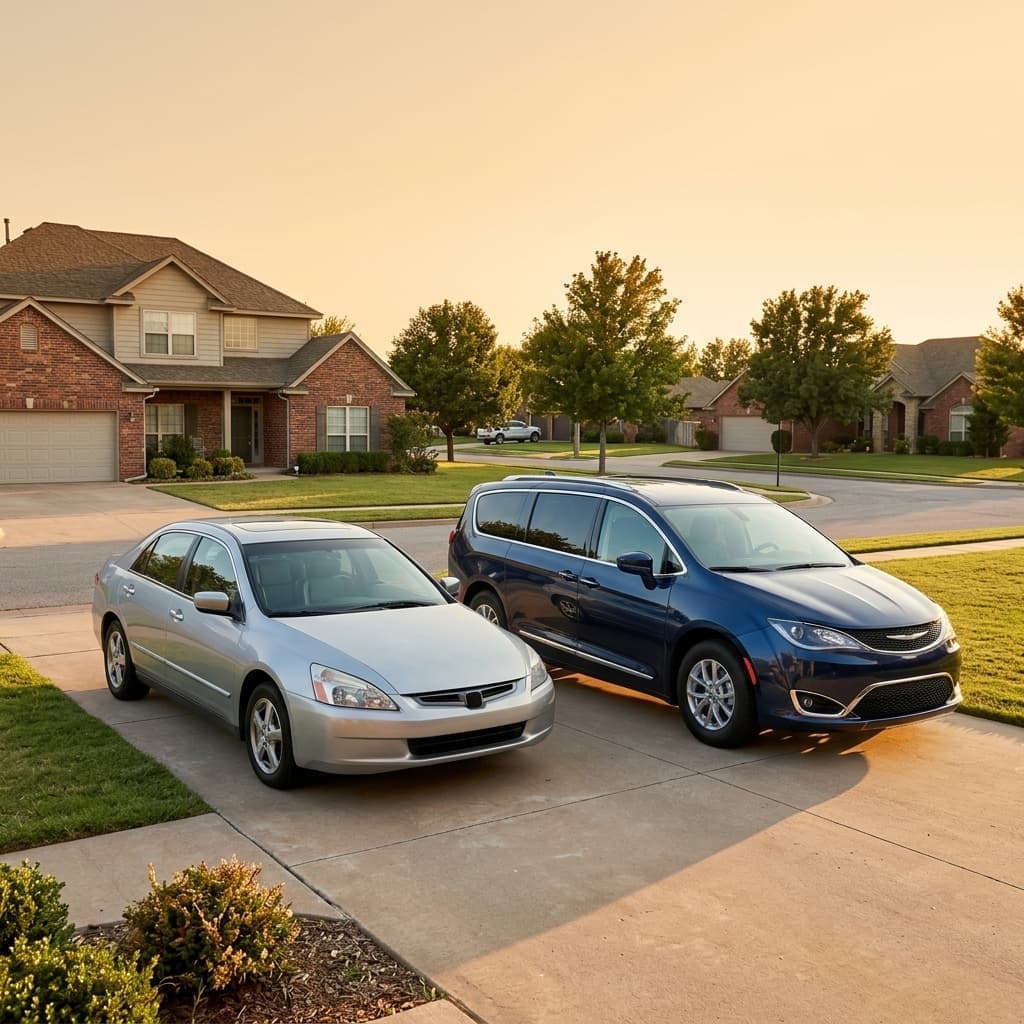
Oklahoma City está construida de una manera que casi obliga a los hogares a tener dos vehículos. La ciudad se extiende por más de 600 millas cuadradas, los trabajos y las escuelas rara vez quedan en la misma dirección, y el transporte público cubre apenas una fracción de la vida diaria, así que el arreglo típico se ve así: un carro para el trayecto diario por la I-44 o la Broadway Extension, y una camioneta que se encarga de recoger a los niños de la escuela, de las compras en Costco y del paseo del fin de semana al lago. Buena parte de lo que hace que valga la pena contratar el seguro de carro y camioneta en Oklahoma como una sola póliza se reduce al descuento, pero el descuento rara vez es lo que detiene a un hogar. Lo que los detiene es una preocupación más simple: los dos vehículos necesitan cosas distintas, así que seguramente no pueden compartir una póliza. Sí pueden. El carro y la camioneta pueden tener niveles de cobertura completamente distintos en la misma póliza, y ajustar la cobertura de cada vehículo a su propia situación es exactamente como se supone que debe funcionar una póliza multivehículo.
Una póliza, dos vehículos, dos niveles de cobertura
Una póliza multivehículo es un solo contrato que enumera cada vehículo por separado, y la cobertura se asigna por vehículo, no por póliza. La parte de responsabilidad civil, el mínimo exigido en Oklahoma de 25/50/25, aplica a toda la póliza porque acompaña a los conductores. Pero la cobertura integral y la de colisión, que son las que reparan sus propios vehículos, se asignan a cada vehículo de forma individual. La camioneta puede tener cobertura total mientras el carro lleva solo responsabilidad civil, o al revés, y cada vehículo con cobertura integral y de colisión también puede tener sus propios montos de deducible.
Combinar niveles de cobertura no rompe la póliza ni el descuento. El descuento multivehículo aplica porque dos vehículos comparten una póliza, no porque compartan una cobertura idéntica.
Cómo decidir qué vehículo lleva cobertura total y cuál lleva solo responsabilidad civil
Para la mayoría de los hogares de Oklahoma City, la división se decide sola en cuanto cada vehículo responde dos preguntas.
¿Está financiado? Un vehículo financiado debe tener cobertura integral y de colisión, porque el acreedor prendario exige que se proteja su garantía. Si a la camioneta más nueva todavía le quedan tres años de pagos, la cobertura total en la camioneta no es opcional. Y si mantener la cobertura total en un vehículo financiado se vuelve realmente inalcanzable, pregúntele al acreedor prendario si un CPI puede combinarse con una póliza de responsabilidad civil, ya que los requisitos de los prestamistas varían y esa combinación suele ser la ruta más económica.
¿Cuánto vale frente a lo que cuesta protegerlo? Un vehículo ya pagado es una cuestión de criterio, y en el centro de Oklahoma ese criterio tiene un matiz local: el vehículo que duerme en el garaje y el que duerme en la cochera no enfrentan la misma temporada de granizo. La cuenta es la misma que define cuándo un vehículo ya pagado realmente necesita cobertura total en cualquier hogar: lo que cuestan la cobertura integral y la de colisión por período, más el deducible, frente a lo que el vehículo realmente pagaría, con el lugar donde se estaciona de abril a junio pesando mucho en la balanza. Algunos vehículos ya pagados claramente justifican la protección, y otros claramente no.
Pase ambos vehículos por esas dos preguntas y la estructura mixta se arma sola: protección donde el vehículo la amerita, responsabilidad civil donde no, y una sola póliza que sostiene a los dos.
Qué comparten los dos vehículos y qué se mantiene separado
La cobertura mixta confunde a la gente en exactamente dos momentos, al presentar un reclamo y al renovar, así que ayuda saber con precisión dónde está la línea.
Compartido: un número de póliza, una fecha de renovación, una factura, los conductores registrados del hogar y el propio descuento multivehículo. Agregar el segundo vehículo es lo que activa ese descuento, y a menudo es el factor decisivo en la prima combinada. También se lleva bien con los ahorros que vienen de acumular descuentos en una póliza de Oklahoma City, ya que un hogar con varios vehículos suele calificar para más de uno.
Separado: el nivel de cobertura de cada vehículo, los deducibles de cada vehículo y la parte de la prima que corresponde a cada uno. Si una tormenta de primavera golpea la camioneta en la cochera, el reclamo se tramita con la cobertura integral y el deducible de la camioneta; el hecho de que el carro tenga solo responsabilidad civil no tiene nada que ver con ese reclamo, y la tarifa del carro no se ve afectada.
La salvedad sobre camionetas que los hogares de Oklahoma City no deben omitir
Hay un límite que importa antes de firmar los papeles. Todo lo anterior aplica a vehículos de propiedad personal en una póliza personal, incluida la minivan familiar y una camioneta de propiedad personal usada para fines del hogar. Una camioneta que además hace entregas para trabajos por aplicación como DoorDash o Uber Eats, un ingreso extra que crece rápido en el área metropolitana de OKC, requiere que ese uso se le informe a su agente, porque manejar para entregas exige agregar cobertura de uso comercial a la póliza personal, y los proveedores lo tratan de forma distinta, así que esa conversación va antes del primer viaje y no después de un reclamo. Una camioneta que pertenece a un negocio va en una póliza comercial, que es un producto completamente diferente.
Al final, el hogar obtiene una póliza, una factura y un descuento, mientras cada vehículo lleva exactamente la cobertura que su propia situación exige. Eso no es un truco ni una petición especial; es el diseño.
Preguntas sobre cobertura mixta que hacen los hogares con varios vehículos en Oklahoma City
¿Ambos vehículos tienen que llevar cobertura total para obtener el descuento multivehículo?
No. El descuento multivehículo aplica porque dos vehículos comparten una póliza. Un vehículo puede llevar solo responsabilidad civil mientras el otro lleva cobertura integral y de colisión, y el descuento sigue aplicando.
¿Mi carro y mi camioneta pueden tener deducibles distintos en la misma póliza?
Sí. Los deducibles se asignan de forma individual a la cobertura integral y de colisión de cada vehículo. La camioneta puede tener un deducible de $500 mientras el carro, si también lleva cobertura total, usa uno de $1,000, o cualquier combinación que su presupuesto permita.
Si mi carro con solo responsabilidad civil se daña en una granizada, ¿ayuda la cobertura total de mi camioneta?
No. La cobertura integral pertenece al vehículo sobre el que está contratada. Los daños por granizo al carro con solo responsabilidad civil saldrían de su bolsillo, que es justamente el compromiso que hay que sopesar al decidir qué vehículo lleva solo responsabilidad civil, y dónde se estaciona cada uno.
¿Agregar una camioneta a mi póliza de carro actual aumenta mi factura total?
La prima total cubre dos vehículos en lugar de uno, pero el descuento multivehículo reduce el costo combinado frente a asegurarlos por separado, y en algunos casos agregar un segundo vehículo baja notablemente el costo por vehículo.