
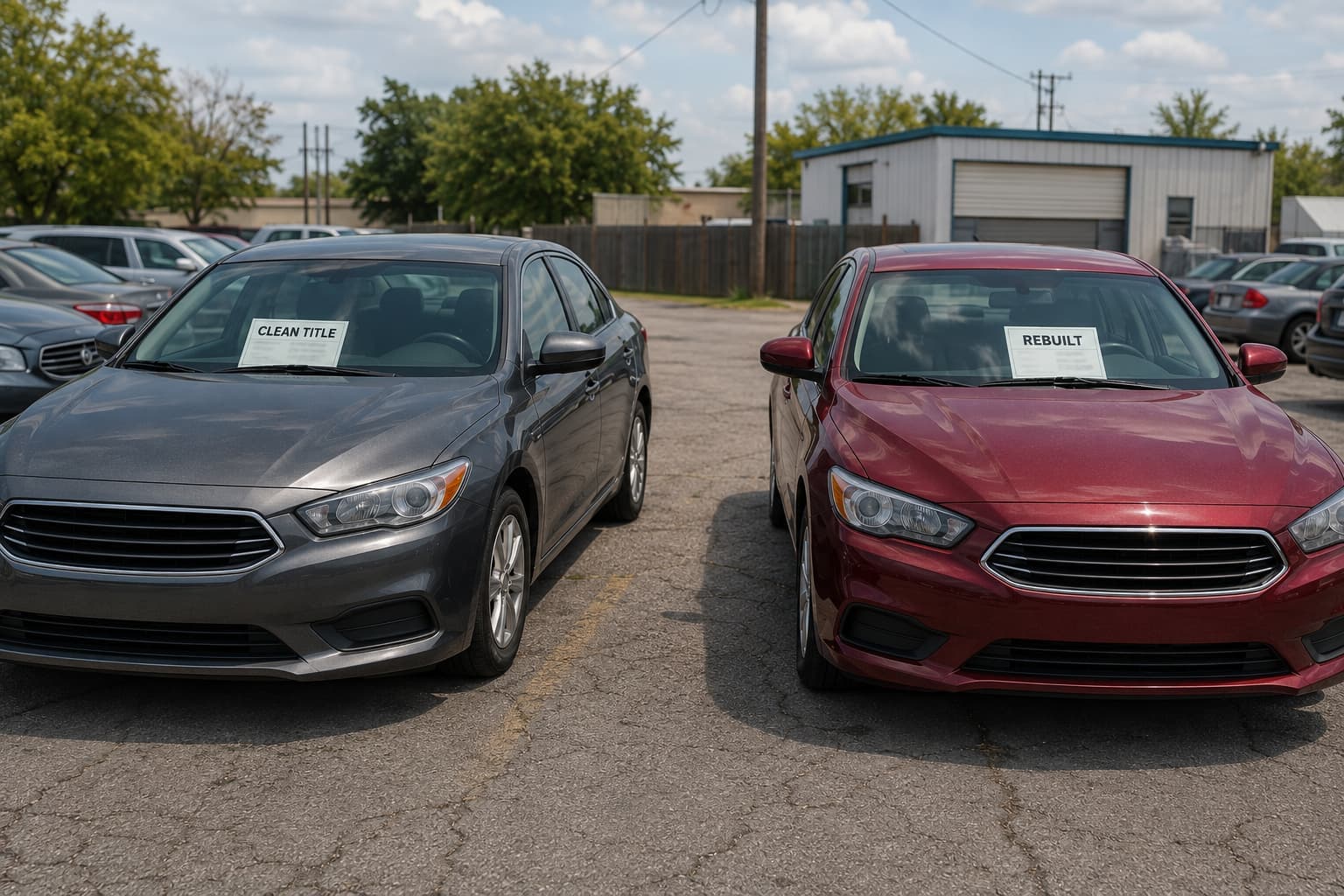
The price catches your attention first.
A rebuilt-title car may cost less than a similar vehicle with a clean title. It may look good, drive well, and seem like an easy way to get more car for your budget.
But that lower price comes with a history.
A rebuilt vehicle was previously considered salvage, repaired, and returned to the road. That history can affect more than what you pay for the car. It can also matter when you shop for insurance, apply for financing, think about the vehicle’s value, or eventually try to sell it.
That does not automatically make a rebuilt-title car a bad buy.
It just means there are a few more things worth understanding before money changes hands.
And if you are looking for cheap full coverage car insurance, start with something more important than the premium:
Find out how the rebuilt title changes your options for that specific vehicle.
What Does a Rebuilt Title Actually Mean?
A rebuilt-title vehicle has already been through a bigger story than the average used car.
At some point, it entered salvage status. It was later repaired and went through Oklahoma’s rebuilt process.
Service Oklahoma describes a rebuilt vehicle as a salvage vehicle that has been repaired and passed a rebuilt inspection to be made roadworthy.
So the basic path looks like this:
Damage → salvage → repairs → rebuilt inspection → rebuilt vehicle
The car may look completely normal today.
The title is what tells you there is more to its history.
That history is important because a rebuilt-title car should not automatically be treated like a cheaper version of the same clean-title vehicle.
Find Out Why the Vehicle Was Rebuilt
A rebuilt title tells you the vehicle has been through significant damage and repairs, but the title alone does not explain what happened.
Before buying, try to learn what caused the vehicle to enter salvage status and what work was done to bring it back.
Was it involved in a collision? Was there major body damage? Were important components replaced? How extensive were the repairs?
Ask the seller for whatever documentation is available. Repair invoices, parts receipts, rebuilt inspection paperwork, before-and-after photos, and maintenance records can all help fill in the story.
The goal is not just to confirm that the vehicle passed Oklahoma’s rebuilt process.
It is to understand the car you are thinking about buying.
The more complete that history is, the easier it is to decide whether the vehicle makes sense for you.
A Rebuilt Title Changes More Than the Name on the Paperwork
Two cars can be the same year, make, model, and trim and still be very different purchases.
One may have a clean title.
The other may have gone through salvage status, repairs, and the rebuilt process.
That difference can follow the car long after the repairs are finished.
It may affect how an insurance company evaluates it, what coverage is available, what information a lender wants, how the vehicle is valued, and how a future buyer looks at it.
That is why price should not be the only comparison.
If the rebuilt car is several thousand dollars cheaper, that may be attractive.
But you also want to understand why it is cheaper and what comes with that title history.
The State and the Insurance Company Are Answering Different Questions
This is one of the easiest parts of rebuilt titles to misunderstand.
Passing Oklahoma’s rebuilt process does not mean every insurance company will treat the vehicle the same way.
The state is answering one question:
Has the vehicle gone through Oklahoma’s process for moving from salvage to rebuilt status?
The insurance company is answering another:
What coverage can we offer on this particular vehicle?
Those are separate decisions.
One insurance company may be comfortable offering the coverage you want. Another may handle the same rebuilt-title car differently.
Some insurers may also want photos, title information, repair records, or other documentation before making that decision.
A rebuilt title does not guarantee a particular insurance option or price.
Ask About Insurance Before You Buy
Before money changes hands, get the VIN and find out how the insurance company will handle that specific vehicle.
The VIN gives the insurer a chance to look at the actual car, not just answer a general question about rebuilt titles.
Instead of relying only on, “Do you insure rebuilt vehicles?” find out what coverage is available for the exact vehicle you are considering.
If you want comprehensive and collision, confirm whether those coverages are available and whether anything else is needed first, such as photos, title information, or repair paperwork.
This matters even more if you are financing the vehicle and need certain coverage to satisfy the lender.
The best time to learn about an insurance limitation is before you buy the car—not after it is already in your driveway.
Full Coverage Can Be a Different Conversation
When people talk about full coverage car insurance, they usually mean a policy that includes liability along with comprehensive and collision coverage.
With a rebuilt-title car, do not automatically assume those options will be handled exactly the same way as they would on a clean-title vehicle.
Availability can vary by insurer and by vehicle.
The company may also want more information about the car before offering physical-damage coverage.
That is why I would put the questions in this order:
Can I get the coverage I want on this vehicle?
Then:
What will it cost?
If you reverse those questions and focus only on finding cheap full coverage car insurance, you may spend time comparing prices before knowing whether the coverage can actually be written for the car.
Take a Good Look at the Car as It Sits Today
The vehicle’s past matters, but so does its current condition.
Look closely at the body, paint, trim, interior, and anything else that may still show signs of earlier damage or repairs.
If you see a dent, scratch, mismatched paint, damaged trim, or another issue, document it.
Take photos.
Keep the photos with the vehicle records.
You are creating a simple record of what the car looked like when you bought it.
That can be useful later if questions come up about existing damage, repairs, or the vehicle’s condition.
Keep the Paperwork
With a rebuilt-title vehicle, documentation is worth holding onto.
That includes things like repair records, inspection paperwork, purchase documents, photos, and receipts for major work completed after you buy the car.
You may never need most of it.
But if a question about the vehicle’s history or condition comes up later, having the paperwork is much easier than trying to track it down several years after the purchase.
It can also help if you eventually sell or trade the vehicle.
A future buyer may want to know the same things you wanted to know:
What happened?
What was repaired?
Who did the work?
How has the vehicle held up since then?
Good records help answer those questions.
Think About Value Differently Too
A rebuilt-title vehicle may not be valued the same way as an otherwise similar vehicle with a clean title.
That matters when you buy it.
It can also matter later if the vehicle is involved in a covered loss and is declared a total loss.
Do not assume the amount you paid for the car automatically becomes its future claim value.
The same goes for the amount someone spent repairing it.
If you are buying comprehensive and collision coverage, ask how the insurer handles valuation for rebuilt-title vehicles and what documentation could be useful later.
Then keep those records somewhere you can actually find them.
Financing Adds Another Question
If you are paying cash, you mainly need to understand the vehicle and the insurance options.
Financing brings a lender into the picture too.
A lender may have its own requirements for comprehensive and collision coverage, deductibles, proof of insurance, and the vehicles it is willing to finance.
A rebuilt title may also affect whether a lender wants to make the loan in the first place.
So do not assume that getting approved for insurance means the financing automatically works—or the other way around.
Before signing for the car, make sure both pieces fit together.
The insurance needs to work for the vehicle, and the insurance arrangement needs to work for the lender.
Think About the Day You Sell It Too
Most buyers are focused on getting the keys.
It is worth thinking one step further ahead.
Someday you may want to sell or trade the car.
The rebuilt title will still be part of its history.
A future buyer may ask about the previous damage, repairs, inspection, maintenance, and how the car has performed since it was rebuilt.
That does not mean the vehicle will be impossible to sell.
It means the same title history you are evaluating today may matter again when you are on the other side of the transaction.
That is another reason to keep the paperwork.
Don’t Let the Lower Price Make the Whole Decision
Imagine you are looking at two similar SUVs in Tulsa.
The clean-title SUV costs more.
The rebuilt-title SUV costs several thousand dollars less.
The rebuilt vehicle may still be the one you prefer.
But compare more than the numbers on the windshields.
Before making the decision, make sure you understand why the vehicle entered salvage status, what repairs were completed, what condition it is in today, what insurance is available, and whether financing will work if you need a loan.
Then ask yourself one final question:
Am I comfortable owning a vehicle with this history?
If the answer is yes and the rest of the pieces line up, you can make the decision with much more information than you had when the lower price first caught your attention.
A Simple Rebuilt-Title Checklist Before You Buy
Before you commit to the car:
- Confirm the title and VIN. Make sure the rebuilt title matches the vehicle you are looking at.
- Learn what happened. Find out why the vehicle entered salvage status and what was repaired.
- Gather the records. Ask for available repair, inspection, and maintenance documentation.
- Look closely at the current condition. Consider having the vehicle inspected by a qualified mechanic or repair professional before buying.
- Check the insurance. Use the exact VIN and find out what coverage is available.
- Check the financing. If you need a loan, make sure the lender will finance the vehicle and accept the insurance arrangement.
- Think beyond today’s price. Consider how the rebuilt title may affect value and resale later.
A rebuilt-title car is a different kind of used-car purchase. Treat it like one.
Cheap Full Coverage Car Insurance for a Rebuilt Vehicle in Tulsa
Once you understand the car and are comfortable with its history, then it makes sense to compare insurance prices.
At that point, you know what you are actually shopping for.
You know the VIN.
You know the title status.
You understand the vehicle’s current condition.
And if the car is financed, you know what the lender expects.
That puts you in a much better position to compare cheap full coverage car insurance for the vehicle you actually plan to own.
Cheapest Auto Insurance can help Tulsa drivers check available Oklahoma auto insurance options using the vehicle’s actual information.
Understand the car first. Then figure out how the insurance fits around it.
Frequently Asked Questions
What is a rebuilt-title car in Oklahoma?
A rebuilt-title vehicle was previously in salvage status, was repaired, and passed Oklahoma’s rebuilt process. The rebuilt title reflects that previous salvage and repair history.
Is a rebuilt-title car the same as a clean-title car?
No. A rebuilt-title car has previously been through salvage status and repairs. That history can affect how insurers, lenders, and future buyers evaluate the vehicle.
Can you get full coverage on a rebuilt-title car?
Possibly. A rebuilt title does not automatically prevent comprehensive and collision coverage, but availability can depend on the insurer and the specific vehicle. Check the exact VIN before assuming the coverage you want is available.
Does passing Oklahoma’s rebuilt inspection guarantee insurance coverage?
No. Oklahoma’s rebuilt process and an insurance company’s coverage decision are separate. Passing the rebuilt process establishes the vehicle’s title status but does not guarantee a particular insurance option or price.
Should you check insurance before buying a rebuilt-title car?
Yes. Checking the exact VIN before buying can help you understand what coverage is available, whether additional documentation is needed, and whether the insurance will satisfy a lender if the vehicle is financed.