
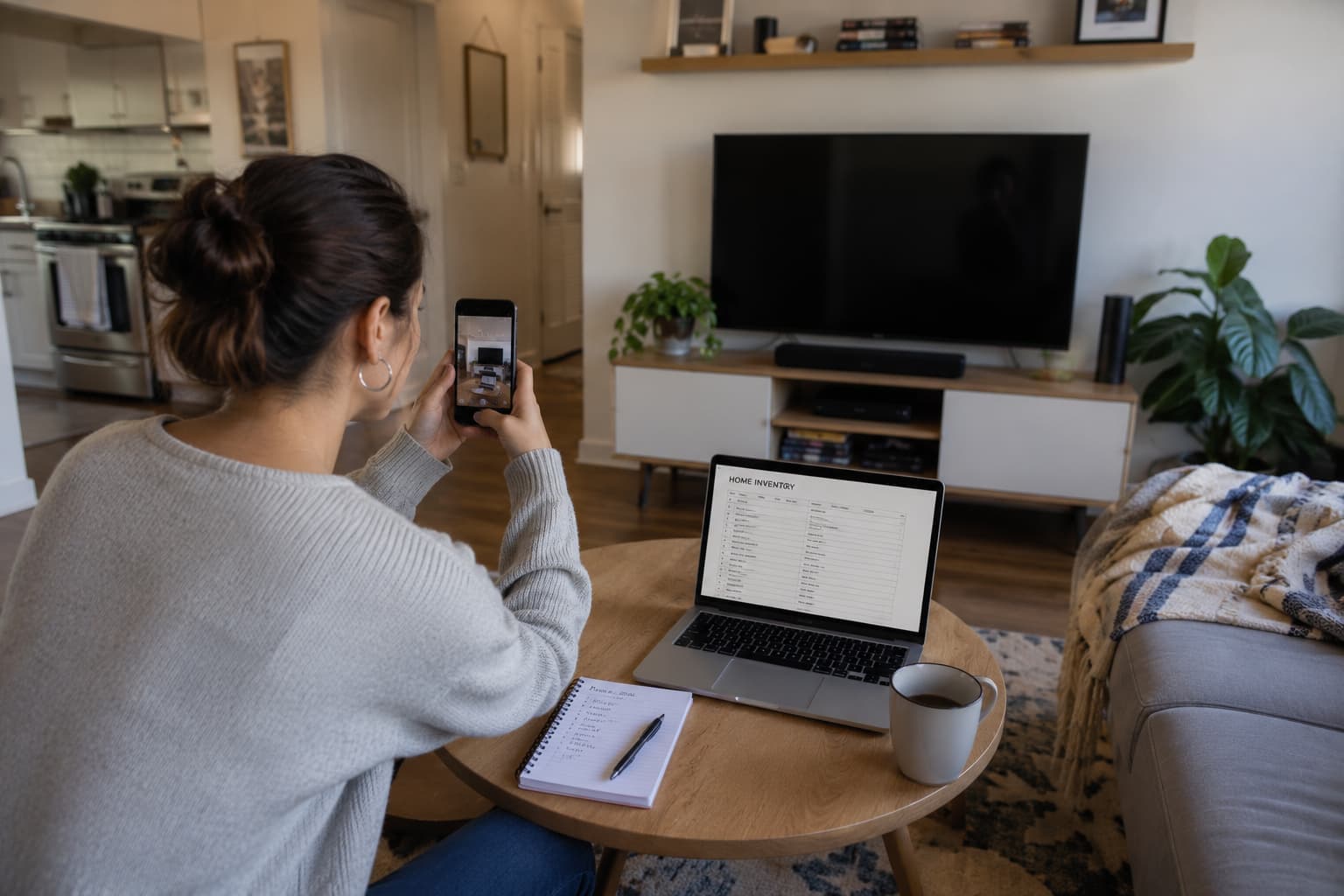
If someone asked you today how much everything in your apartment is worth, would you know the answer?
Most people wouldn’t.
It’s easy to remember the big-ticket items like your television or laptop. It’s much harder to remember everything else—the furniture, clothes, cookware, shoes, small appliances, bedding, and other everyday belongings that fill your home.
Individually, those items may not seem especially valuable. Together, they can represent thousands of dollars in personal property.
Creating a home inventory helps you see the bigger picture. Before requesting a renters insurance quote, taking inventory of what you own can help you estimate the value of your belongings and choose coverage that’s based on your actual needs rather than a guess.
Start One Room at a Time
Looking around your entire apartment can feel overwhelming.
Instead of trying to remember everything at once, go room by room.
Walk through each area of your home and make a list of what you see.
For example, start with your:
- Living room
- Bedroom
- Kitchen
- Bathroom
- Home office
- Closets
- Laundry room
- Storage area or detached storage unit, if you have one
Breaking your inventory into smaller sections makes it much easier to stay organized and helps you avoid forgetting items.
Don’t Overlook the Things You Use Every Day
When people think about valuable belongings, they often focus on expensive electronics or jewelry.
In reality, the items that add up the fastest are usually the ones you use every day.
As you create your inventory, consider including:
- Sofas and chairs
- Beds and mattresses
- Dressers and tables
- Televisions
- Computers and laptops
- Cell phones and tablets
- Gaming systems
- Clothing and shoes
- Kitchen appliances
- Cookware, dishes, and utensils
- Bedding and towels
- Home décor
One item by itself may not seem particularly valuable. But when you add everything together, many renters are surprised by how much it would cost to replace everything they own.
Make Note of Higher-Value Items
Some belongings deserve a little more detail than simply writing them on a list.
If you own higher-value items, it can be helpful to record information such as:
- Brand and model
- Serial number
- Approximate purchase date
- Estimated purchase price
Examples include:
- Laptops
- Cameras
- Jewelry
- Musical instruments
- Watches
- Collectibles
- Bicycles
Keeping this information together makes it easier to update your inventory over time and gives you a better record of the belongings you own.
Take Photos as You Go
Your inventory doesn’t have to be limited to a written list.
As you move through your apartment, consider taking clear photos of each room.
For larger or higher-value belongings, you may also want to photograph:
- Product labels
- Serial number stickers
- Receipts, if you still have them
- Original packaging for electronics or appliances
Store your photos somewhere you’ll be able to access them later, such as cloud storage or another secure digital location.
Having photos alongside your inventory makes it much easier to remember what you own when it’s time to review or update your list.
Check the Places People Commonly Forget
One of the biggest mistakes renters make is only listing the items they can immediately see.
Before you finish your inventory, open the places that usually get overlooked.
Take a look inside:
- Bedroom closets
- Hall closets
- Kitchen cabinets
- Bathroom storage
- Under the bed
- Storage bins
- Laundry room cabinets
- Detached storage units
You may find luggage, holiday decorations, tools, sports equipment, camping gear, extra linens, or small appliances that you completely forgot about.
Those items are still part of your personal belongings and should be included in your inventory.
Update Your Inventory When Things Change
A home inventory shouldn’t stay the same forever.
As time goes on, you may buy new furniture, replace electronics, purchase jewelry, or add home office equipment.
Whenever you make a significant purchase, take a few minutes to update your inventory.
Even reviewing it once a year can help ensure your list continues to reflect what you actually own.
Your Inventory Can Make Requesting a Quote Easier
One of the questions you’ll likely think about before purchasing renters insurance is how much personal property coverage makes sense for your situation.
Having a home inventory gives you a much better starting point than trying to estimate everything from memory.
Instead of guessing, you’ll have a clearer picture of your belongings and can have a more informed conversation with your insurance agent about your coverage options.
The goal isn’t to create a perfect spreadsheet.
It’s simply to understand what you own before requesting a renters insurance quote.
Frequently Asked Questions
What is a home inventory for renters insurance?
A home inventory is a list of your personal belongings. It typically includes furniture, electronics, clothing, kitchen items, appliances, and other possessions to help you understand the value of what you own before purchasing renters insurance.
Should I include clothing in my home inventory?
Yes. Individual clothing items may not seem expensive, but the total value of your wardrobe can add up quickly. Including clothing gives you a more complete picture of your personal belongings.
Do I need receipts for everything I own?
No. Receipts can be helpful for higher-value purchases, but they’re not necessary for every item. Photos, serial numbers, and basic descriptions can also help you keep an organized inventory.
How often should I update my home inventory?
It’s a good idea to review your inventory whenever you make significant purchases or move to a new apartment. Updating it at least once a year can also help keep it current.