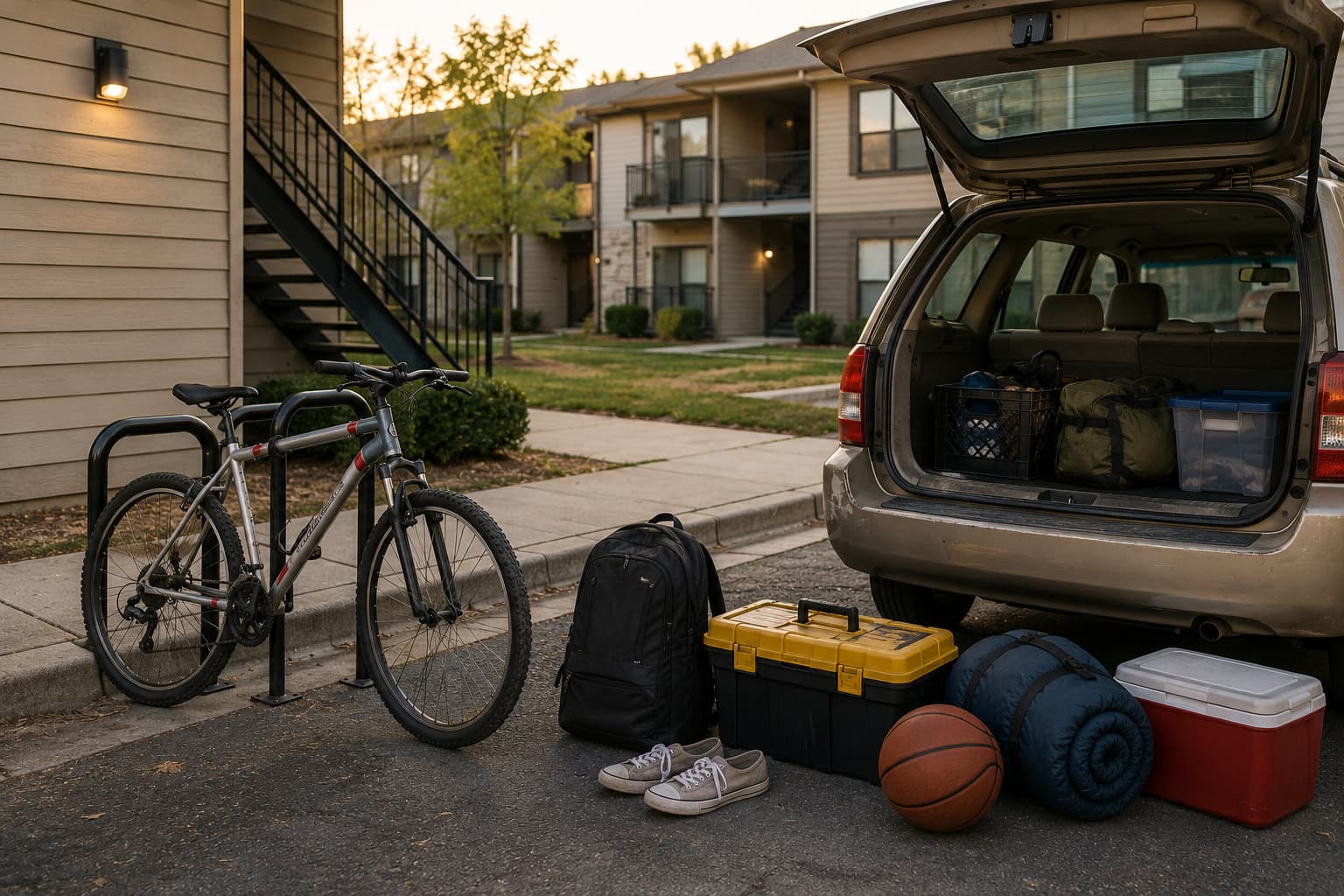
You lock your bike outside your apartment before heading inside for the night. Or maybe you leave your laptop and backpack in your car while running into the grocery store for a few minutes. When you come back, something is missing.
The next question is almost always the same:
“Does renters insurance cover this, or is it an auto insurance claim?”
It’s an easy question to ask because many renters assume their policy only protects the belongings inside their apartment. In reality, many renters insurance policies may also help cover personal property away from home. The details depend on what was stolen or damaged, how the loss happened, your deductible, and the limits in your policy.
Does Renters Insurance Cover Belongings Outside Your Apartment?
Many people think renters insurance stops protecting their belongings the moment they walk out the front door.
That’s usually not how renters insurance works.
Many policies extend personal property coverage beyond your apartment, which means belongings may still be covered while they’re temporarily away from home. That could include property stored in your vehicle, a storage unit, or another location, depending on the policy and the cause of the loss.
The location is only part of the picture.
A better question is:
Was this a covered loss under my renters policy?
For example, someone who has a bicycle stolen from a bike rack may have a completely different claim than someone whose expensive work equipment disappears from a truck. The policy, the type of property, and any applicable limits all play a role.
Does Renters Insurance Cover a Stolen Bike?
Bicycles are one of the easiest belongings to overlook because they rarely stay inside the apartment.
They’re locked to bike racks.
Stored on balconies.
Left in garages.
Loaded into vehicles after a weekend ride.
The location changes, but they’re still personal property.
If a bicycle is stolen or damaged by a covered event, renters insurance may help pay to replace it. Exactly how much depends on several factors, including your deductible, the value of the bike, and whether any special limits apply.
Consider a common situation.
You lock your bike outside overnight. The next morning it’s gone.
Instead of asking whether renters insurance covers bicycles in general, ask questions that actually affect the claim.
- Was bicycle theft a covered loss?
- Does the policy have a limit for bicycles or sporting equipment?
- Do I have photos, receipts, or the serial number?
- Is the bike worth more than my deductible?
Those answers matter much more than whether the bike was sitting inside your apartment.
This becomes even more important with higher-value bicycles. Replacing a basic commuter bike is very different from replacing a multi-thousand-dollar road bike or electric bike. If you own an expensive bicycle, it’s worth reviewing your policy before there’s ever a reason to file a claim.
Are Tools in Your Trunk Covered by Renters Insurance?
A lot of people keep more than jumper cables in their trunk.
There might be a toolbox for weekend projects, a cordless drill, fishing gear, camping equipment, or other personal belongings that stay in the vehicle year-round. If someone breaks into the car and steals those items, the first question is usually whether auto insurance pays for them.
In many situations, the answer starts with renters insurance rather than auto insurance.
The reason the tools are there also matters.
Someone carrying a basic household toolbox for personal use has a different insurance situation than a contractor transporting thousands of dollars’ worth of equipment to job sites every day. Many renters policies place different limits on business property than they do on personal belongings.
For example, suppose someone parks outside a home improvement store while picking up supplies. They return a few minutes later to find the rear window broken and their toolbox missing.
Questions worth asking include:
- Were the stolen tools for personal use or for work?
- Does the policy have a separate limit for business property?
- Does theft from a vehicle affect how the claim is handled?
- Is the total value of the tools greater than the deductible?
Those details often matter more than simply asking whether “tools are covered.”
My Car Was Broken Into. Does Auto or Renters Insurance Pay?
A vehicle break-in often creates two separate insurance claims.
One policy may help repair the damage to the vehicle.
Another may help replace the belongings that were inside it.
That’s why it’s helpful to think about the incident as two different losses instead of one.
| If This Was Damaged or Stolen… | It Usually Starts With… |
| Broken window | Auto insurance |
| Damaged door or lock | Auto insurance |
| Stolen backpack | Renters insurance |
| Laptop or tablet | Renters insurance |
| Clothing or luggage | Renters insurance |
| Personal toolbox | Renters insurance (subject to policy terms) |
| The vehicle itself | Auto insurance |
A common misunderstanding is assuming that having “full coverage” on a vehicle automatically protects everything inside it.
That’s not usually how insurance works.
The vehicle and the personal belongings inside it are often treated separately. Knowing that before something happens can make filing a claim much less confusing.
Does Renters Insurance Cover Items in a Storage Unit or on Your Balcony?
Apartment living often means finding extra places to keep your belongings.
Maybe you use a small storage closet down the hall.
Maybe your bicycle stays on the balcony because there’s no room inside.
Maybe holiday decorations spend most of the year in a detached storage unit.
Those belongings don’t automatically lose coverage simply because they aren’t sitting inside your apartment.
However, where the property was stored, what caused the loss, and the limits in your policy can all affect how a claim is handled.
Some of the most common items people keep outside their apartment include:
- Bicycles
- Patio furniture
- Holiday decorations
- Sports equipment
- Lawn equipment
- Storage bins
- Camping gear
One simple habit can make a huge difference if something is stolen.
Take photos of expensive belongings before you need them.
Save receipts when possible.
Write down serial numbers for electronics, bicycles, and tools.
If you ever have to file a claim, proving ownership is often much easier when you’ve already documented what you own.
When Does Your Deductible Matter?
The value of a claim is only part of the equation.
Your deductible also affects whether filing a claim makes financial sense.
For example, if someone steals a backpack worth $200 and your deductible is $500, insurance may not provide a payment for that loss.
Now consider a different situation.
Someone breaks into your vehicle and steals a laptop, camera, backpack, and bicycle rack, with thousands of dollars in total losses.
That conversation looks very different.
Before filing a claim, ask yourself:
- How much were the stolen belongings worth?
- Is the total loss greater than my deductible?
- Do any special limits apply to the property that was stolen?
Knowing those answers helps set realistic expectations before starting the claims process.
What Should You Do Before Something Gets Stolen?
The best time to think about coverage isn’t after your bike disappears or your vehicle is broken into.
It’s before any of it happens.
A few simple steps can make a future claim much easier:
- Take photos of valuable belongings.
- Keep receipts whenever possible.
- Record serial numbers for bicycles, laptops, cameras, and power tools.
- Review your deductible.
- Ask whether expensive belongings have special coverage limits.
- Understand whether business property is treated differently than personal property.
These small steps take only a few minutes but can save a great deal of frustration if you ever need to prove ownership after a theft.
Before You Leave Your Bike or Tools Outside
Many renters are surprised to learn that their belongings may still be protected even when they’re outside the apartment.
The key isn’t simply where the property was located. It’s whether the loss is covered by the policy, whether any special limits apply, and how the deductible affects the claim.
Whether it’s a bicycle locked outside overnight, a toolbox kept in the trunk, or a backpack stolen during a vehicle break-in, asking those questions before something happens is far easier than trying to figure them out afterward.
If you’re shopping for renters insurance or reviewing your current coverage, ask how your policy handles belongings away from home, theft from a vehicle, high-value personal property, and any limits that could apply. A quick conversation today can help prevent surprises later.
Frequently Asked Questions
Does renters insurance cover a bicycle kept outside?
It may. A bicycle may be covered if it’s stolen or damaged by a covered loss, but your deductible, policy limits, and the bike’s value can all affect the claim.
Are tools in my trunk covered by renters insurance?
Personal tools may be covered, while business equipment may be subject to different limits or exclusions depending on the policy. Review your policy or ask your insurance company how business property is handled.
Does my landlord’s insurance cover my belongings?
No, not usually. A landlord’s policy generally protects the building itself. Your personal belongings are typically protected under your own renters insurance policy.
Should I keep receipts and photos of expensive belongings?
Yes. Photos, receipts, serial numbers, and model information can make it much easier to document ownership and value if you ever need to file a claim.