
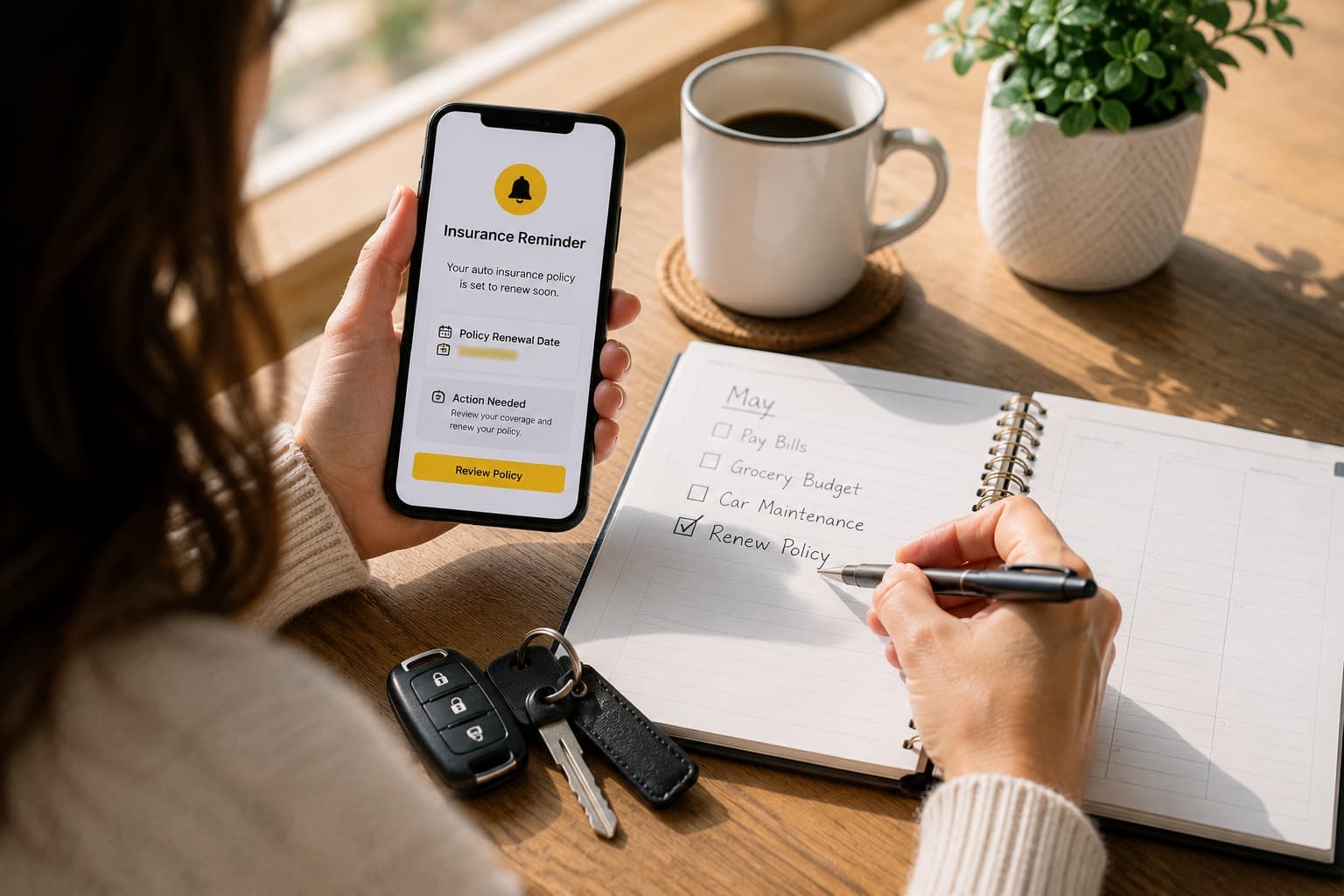
Auto insurance is easy to put on autopilot.
Once the policy is active, most people save the insurance card, make the payments, and move on with everything else they have going on. They may not look closely at the policy again until it renews or something changes.
Maybe you bought another vehicle, moved to a new Broken Arrow address, paid off a car loan, added a driver, or noticed that the next payment is different. Those are the moments when a quick policy review can save you from having to fix a problem later.
You do not need to study every page of the policy. Start with the details most likely to affect your price, proof of insurance, payments, and future policy changes.
Here are 12 things worth checking before you buy or renew Oklahoma auto insurance:
- The vehicle identification number
- The drivers connected to the policy
- The address where the vehicle is kept
- The policy start and end dates
- The lienholder information
- The vehicles currently listed
- The complete payment schedule
- Available discounts
- Prior-insurance information
- The documents you will receive
- Recent household or driving changes
- The total cost for the policy term
Taking a few minutes to review these details can help prevent incorrect documents, missed payments, renewal surprises, and delays when you need proof quickly.
1. Make Sure the VIN Matches the Vehicle
The vehicle identification number, or VIN, is one of the first details to check when buying or changing a policy.
A VIN contains 17 characters, and one incorrect letter or number can cause the insurance documents to show the wrong vehicle.
This can become a problem when:
- Buying from a dealership
- Purchasing from a private seller
- Replacing a vehicle
- Adding another household vehicle
- Providing proof for registration
- Sending documents to a lender
Before the policy is issued, compare the VIN on the quote with the VIN shown on the buyer’s order, title paperwork, registration, or vehicle itself.
Take a moment to review each character rather than relying only on the year, make, and model. Two similar vehicles can have completely different VINs.
For a Broken Arrow driver trying to finish a vehicle purchase after work, catching a VIN error before payment is much easier than waiting at the dealership while corrected proof is issued.
2. Review the Drivers Connected to the Policy
Households change over time, and the people driving the vehicles can change too.
Think about everyone who regularly drives or has access to the insured vehicles, including:
- A spouse
- A teenager who recently started driving
- An adult child living at home
- A relative who regularly borrows a vehicle
- A household member who recently received a license
- Someone who recently moved into or out of the home
The insurance company may need to know who lives in the household and who regularly operates each vehicle.
If someone’s situation recently changed, mention it during the quote or renewal review. The agent or insurance company can explain whether that person needs to be added, removed, excluded, or otherwise addressed under the policy.
This is especially helpful at renewal because old household information can remain on a policy unless someone requests an update.
3. Check the Garaging Address
The garaging address is the location where the vehicle is primarily kept.
It may not always be the same as the mailing address. It can also become outdated after a move.
Take a look at the address on the policy if you:
- Recently moved to Broken Arrow
- Changed apartments
- Moved across town
- Began keeping the vehicle at a different home
- Still receive mail at a previous address
- Updated your license but not your insurance
The correct address helps the policy reflect where the vehicle is normally stored and driven. It also makes sure renewal notices and policy documents reach the right place.
A move does not need to be far away to be worth reporting. Even a change within Broken Arrow should be updated.
4. Confirm When the Policy Becomes Active
Receiving a quote does not automatically mean the vehicle is insured.
Before you rely on an insurance card or other document, confirm:
- The effective date
- The exact time coverage begins
- Whether the payment was completed
- Whether the policy was issued
- Whether any signatures are still needed
- Whether the insurance company requested additional information
This matters when insurance is needed for a same-day vehicle purchase, registration issue, reinstatement step, or policy replacement.
A useful question to ask is:
“Is the policy active now, and what time did the coverage begin?”
That gives you a clearer answer than simply asking whether the quote is finished.
5. Look Over the Lienholder Information
When a vehicle is financed, the lender or finance company may need to be listed as the lienholder.
The dealership can usually provide the correct information, including:
- The lender’s full legal name
- The lender’s mailing address
- The vehicle connected to the loan
- Any instructions for sending proof
Small errors can lead to requests for corrected documents later. The lender’s name may be misspelled, the address may be incomplete, or the lienholder may be attached to the wrong vehicle.
If the loan was recently paid off, this is also a good time to ask whether the old lienholder should be removed.
Keeping this information current helps the policy match the vehicle’s actual ownership and financing status.
6. Make Sure the Vehicle List Is Current
It is surprisingly easy for an old vehicle to remain on a policy or for a newly purchased vehicle to be listed incorrectly.
Review every vehicle and ask:
- Do I still own it?
- Was it recently sold or traded?
- Did another vehicle replace it?
- Is the correct driver connected to it?
- Is a vehicle missing?
- Has the way the vehicle is used changed?
A Broken Arrow household may have one vehicle used for a daily Tulsa commute and another used mainly for errands, school pickup, or occasional driving.
The policy should reflect the vehicles that are actually in the household today, not the vehicles that were there several months or years ago.
When removing a vehicle, confirm the effective date so there is no confusion about when the change took place.
7. Review More Than the First Payment
The amount due today is important, but it does not show the complete cost of the policy.
Before buying or renewing, ask for:
- The first payment
- The number of future payments
- The amount of each payment
- The payment due dates
- Billing or installment fees
- The paid-in-full amount
- The total cost for the policy term
A smaller first payment may be helpful when starting coverage, but it is still important to know what the remaining payments will look like.
At renewal, compare the new schedule with the previous one. A change in price could be connected to a new vehicle, driver, address, payment method, discount, driving history, or insurance-company rate adjustment.
Instead of looking only at what is due today, ask:
“What will I pay by the end of the policy term?”
That gives you a much better picture of whether the payment plan fits your budget.
8. Ask Which Discounts Are Included
Available discounts can depend on the insurance company, driver, household, vehicle, and payment setup.
Possible savings may be connected to:
- Multiple vehicles
- Prior insurance
- Automatic payments
- Paperless billing
- Paying in full
- Homeownership
- Renters insurance
- Defensive driving
- Military service
- First-responder status
- Driving history
- Other policy or household details
Some discounts require documentation. Others may change when a vehicle is removed, a payment method expires, or prior coverage cannot be verified.
There is no need to memorize every possible discount. Simply ask which ones are currently included and whether any additional information could help you qualify for another available option.
At renewal, it can also be helpful to ask whether any discount from the previous term has changed or ended.
9. Use the Exact Prior-Insurance Dates
Prior-insurance information can affect pricing, eligibility, and the documents needed to start a policy.
If you recently changed companies or experienced a lapse, gather:
- The previous insurance company’s name
- The prior policy number
- The start and end dates
- The cancellation or expiration date
- The reason the policy ended
- Any available proof of prior coverage
Try to use the dates shown on the actual documents rather than estimating.
Even a small difference can affect whether the new insurance company views the coverage as continuous or identifies a lapse.
Having accurate information ready can also make the quote process faster.
10. Know Which Documents Will Be Available
An insurance ID card is the document most drivers recognize, but it is not the only document connected to the policy.
Depending on the situation, you may also need:
- A declarations page
- A payment receipt
- The billing schedule
- Policy documents
- Proof showing a lienholder
- Proof showing the vehicle and effective date
- A document sent directly to a dealership or lender
A dealership, lender, registration office, or other party may ask for information that does not appear on a basic ID card.
Before leaving the conversation, ask how the documents will be delivered and who to contact if someone requests a different form of proof.
Saving digital copies can make future updates and requests easier.
11. Think About What Changed Since the Last Policy Term
Renewal is a good time to think back over the previous several months.
You may need to update the policy if:
- You moved
- Your commute changed
- A new driver joined the household
- A household member moved out
- A teenager received a license
- You got married
- A vehicle was sold
- A vehicle loan was paid off
- Another vehicle was purchased
- Your contact information changed
- Your payment method changed
- The way a vehicle is used changed
For example, a Broken Arrow driver who changed jobs may no longer commute into Tulsa every day. Another household may have added a younger driver or sold a backup vehicle.
Mentioning those changes gives the agent or insurance company a chance to review the current information instead of automatically carrying everything into the next term.
12. Compare the Renewal With the Current Policy
When the renewal arrives, place it next to the current declarations page.
Look for changes in:
- Vehicles
- Drivers
- Address
- Policy dates
- Payment plan
- Total premium
- Discounts
- Lienholder information
- Deductibles
- Selected limits and options
- Fees
Most renewals will look familiar, which makes smaller changes easy to miss.
If a price, driver, vehicle, discount, or payment detail looks different, ask what changed before completing the renewal.
The goal is not to challenge every number. It is simply to understand the policy you are agreeing to for the next term.
A Simple Checklist for Buying a Policy
When you are buying a vehicle or starting a new policy, it helps to have the following information ready:
- Exact VIN
- Vehicle year, make, and model
- Purchase date
- Correct garaging address
- Information for regular drivers
- Lender name and address, if financed
- Requested effective date
- Preferred payment method
- Current or prior insurance information
- Dealership contact information, if proof needs to be sent
Before driving away, confirm that the policy is active and that the proof shows the correct vehicle.
A Simple Checklist for Renewal
When the renewal documents arrive, review:
- Current vehicles
- Household drivers
- Garaging and mailing addresses
- Lienholder information
- Payment method
- Automatic-payment status
- Current discounts
- Policy dates
- Total premium
- Updated insurance cards
Starting this review before the expiration date gives you time to correct information without feeling rushed.
Common Details Drivers Overlook
A Vehicle Was Sold but Never Removed
Selling or trading a vehicle does not always remove it from the policy automatically. Confirm the date the vehicle should come off the policy.
A New Driver Was Never Discussed
A teenager, spouse, or adult household member may need to be addressed even if they do not drive every vehicle.
The Address Is Outdated
A move within Broken Arrow can still leave the policy with an incorrect garaging or mailing address.
The Payment Method Expired
A replaced debit card or closed bank account can cause an automatic payment to fail.
The Old Lender Is Still Listed
After a loan payoff, the previous lienholder may remain until a removal is requested.
The First Payment Looked Affordable, but Later Payments Were Higher
Reviewing the complete schedule can help prevent an unexpected payment later in the term.
The Quote Was Mistaken for Active Coverage
A price estimate or unfinished application is not the same as an issued policy. Confirm the effective date and time before driving.
Use the Declarations Page as Your Summary
The declarations page is usually the fastest place to review the main policy details.
Think of it as the policy’s summary sheet.
It commonly shows:
- The named insured
- Policy number
- Policy dates
- Listed vehicles
- Listed drivers
- Address
- Selected coverage information
- Deductibles
- Lienholder
- Premium
- Discounts
You do not need to understand every code or abbreviation immediately.
Start by checking whether the names, vehicles, dates, address, and payment information match your current situation. An agent or licensed insurance professional can help explain anything that is unclear.
When Should You Review a Renewal?
The best time is as soon as the renewal paperwork becomes available.
Reviewing early gives you time to:
- Ask about a price change
- Update vehicles or drivers
- Replace an expired payment method
- Provide missing documents
- Correct an address
- Review discounts
- Request updated proof
Waiting until the final day can turn a small correction into an urgent problem.
Even a five-minute review can make the renewal process easier.
What to Say When You Call
The conversation usually goes more smoothly when you explain what changed or what you need.
You might say:
“I bought another vehicle and need to make sure it is listed correctly.”
“I moved to Broken Arrow and need to update the address where my vehicle is kept.”
“I paid off my car and want to remove the old lienholder.”
“My renewal price changed, and I would like to understand why.”
“My teenager recently started driving.”
“I sold one vehicle and need to make sure it comes off the policy.”
“I need proof sent to a dealership today.”
A little context helps the person assisting you understand which details and documents need attention.
A Few Minutes Now Can Save Time Later
Buying or renewing auto insurance does not need to become a major project.
Most of the review comes down to making sure the policy still matches your life:
- The right people
- The right vehicles
- The right address
- The right dates
- A manageable payment plan
- Current lender information
- Proof you can access when needed
Cheapest Auto Insurance can help Oklahoma drivers request a quote, review available options, update policy information, and understand what may be needed before coverage begins or renews.
The goal is not to make insurance feel more complicated. It is to help you feel confident that the information is correct before you pay.
Frequently Asked Questions
What should I check before buying Oklahoma auto insurance?
Check the VIN, vehicle information, regular drivers, garaging address, policy start date, payment schedule, lienholder information, available discounts, and the documents you will receive.
What should I review before renewing auto insurance?
Review the vehicles, drivers, address, policy dates, payment method, discounts, lender information, and total premium. Compare the renewal with the current declarations page.
Should I remove a vehicle after selling or trading it?
Yes. Contact the insurance agency or company and confirm the date the vehicle should be removed. A sold or traded vehicle may stay on the policy until the change is requested.
Do I need to update my insurance after moving within Broken Arrow?
Yes. Update the garaging and mailing addresses so the policy reflects where the vehicle is primarily kept and where policy documents should be sent.
What happens if the VIN is wrong?
An incorrect VIN can create problems with proof of insurance, registration, a dealership, or a lender. Contact the insurance agency or company and request a correction.
Should I remove the lienholder after paying off my vehicle?
Yes. Ask for the previous lienholder to be removed after the loan is paid. The insurance company may request proof that the loan has been satisfied.
Why did my renewal payment change?
The price can change because of insurance-company rates, vehicles, drivers, address, payment method, discounts, prior insurance, claims, driving history, or other underwriting factors. Ask for an explanation based on the current policy.
Is a quote the same as active insurance?
No. A quote is a price estimate. Confirm that the payment, required signatures, underwriting steps, and policy issuance are complete before relying on proof of insurance.
When should I review my renewal?
Review it as soon as the renewal documents become available. Starting early gives you time to correct information and handle payment or documentation issues before the current policy expires.