
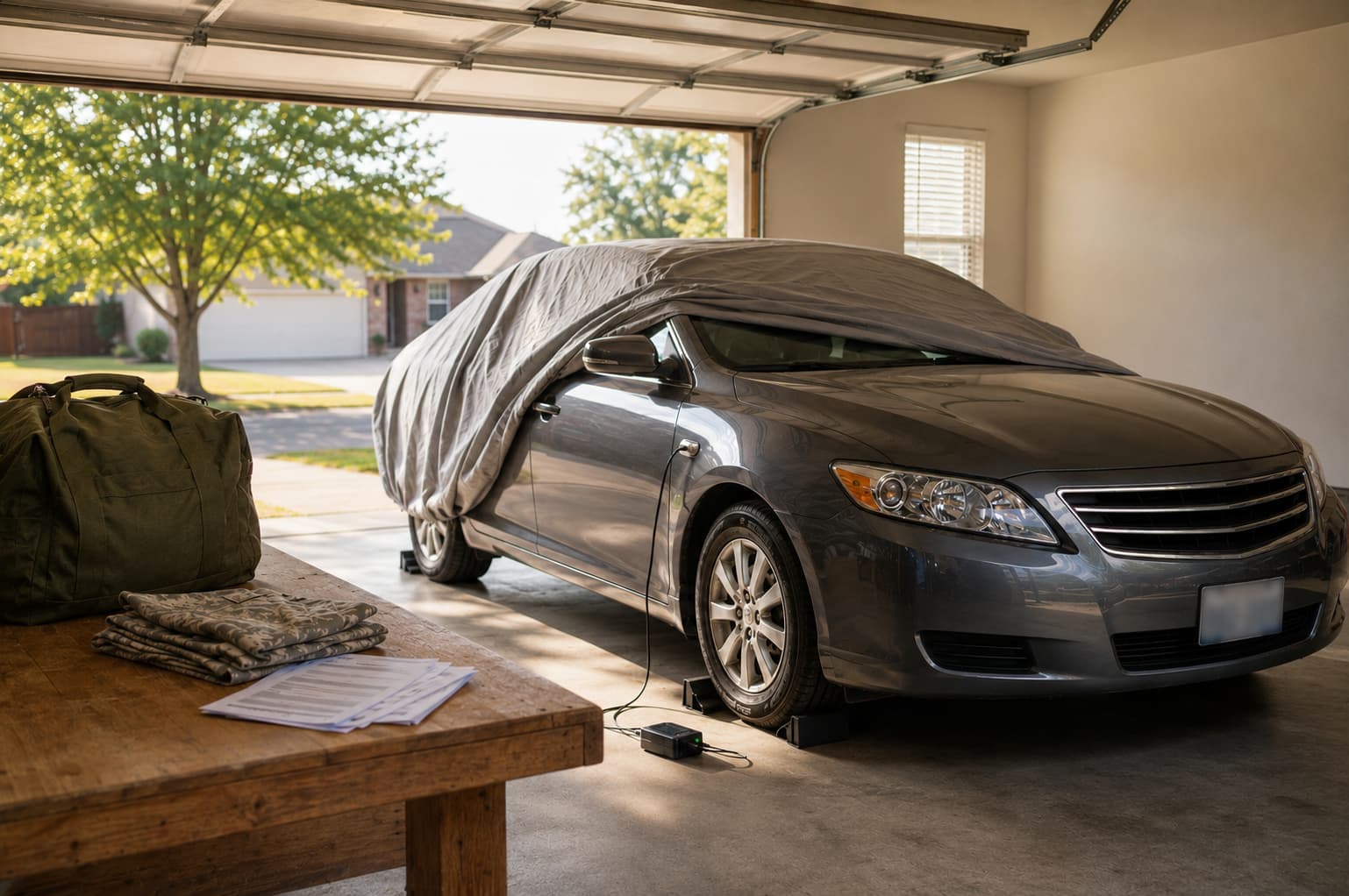
A deployment is coming up, and one of the household cars is going to spend the next several months parked in Del City.
If nobody plans to drive it, you might start wondering whether it makes sense to change the insurance—or even cancel it altogether.
But a parked car is not always as simple as an unused car.
There may still be a loan on it. A spouse or family member might need to drive it occasionally. The vehicle may need to stay registered in Oklahoma. And even while it sits, it can still be damaged.
Those details can all affect military car insurance during deployment.
The short answer: Before changing insurance on a parked vehicle, find out whether it is financed, whether anyone may drive it, whether it will remain registered, and where it will be stored.
Once you know those four things, the rest is much easier to sort out.
Start With Two Questions
Before getting into registration, storage, or policy options, answer these first:
- Is there still a loan or lease on the vehicle?
- Will anyone drive it during the deployment?
A paid-off car that will sit inside a garage for several months is one situation.
A financed car that a spouse may occasionally drive is another.
Those two answers can quickly tell you what needs attention next.
If the Car Is Financed, Check the Loan First
Parking the vehicle does not change the loan agreement.
If there is still money owed on the car, check the finance or lease requirements before reducing coverage.
A lender may require insurance that protects the vehicle itself while the loan is active. If required coverage lapses, the lender may be able to purchase insurance and charge the borrower for it.
That is commonly known as force-placed insurance.
Before making a change, look at the loan agreement or ask the lender a simple question:
“What insurance am I required to keep on this vehicle while the loan is active?”
That gives you a much clearer starting point.
Will the Car Stay Registered in Oklahoma?
Next, think about registration.
For military members who maintain an Oklahoma vehicle registration, Service Oklahoma requires valid insurance that meets the state’s minimum liability requirements.
That means these two statements are not necessarily the same:
“Nobody plans to drive the car.”
and
“The car does not need insurance.”
Oklahoma does have a non-use process for certain vehicles that will not be operated on public streets or highways during the uninsured period.
But that is a specific arrangement with restrictions. It is different from simply leaving a vehicle parked most of the time while keeping it available for occasional use.
If a spouse may need the car, someone may need to move it, or the vehicle is expected to remain available for normal road use, understand the registration situation before making insurance changes.
Parked Doesn’t Mean Risk-Free
The car may not be moving.
Plenty of things around it still are.
A parked vehicle can still be damaged by:
- hail
- fire
- theft
- vandalism
- falling branches or objects
- another vehicle hitting it while parked
That is worth thinking about before removing coverage simply because the mileage will drop.
Ask yourself a different question:
What would happen if something damaged the car while it was sitting?
The answer depends on the coverage in place and the circumstances of the loss.
The point is not that every parked vehicle needs the same coverage.
It is that driving risk is not the only risk a parked vehicle faces.
Where Will the Car Spend the Deployment?
A vehicle that normally sits at a Del City home may spend the deployment somewhere else.
Maybe it will be:
- inside a garage
- in the driveway
- in an apartment parking lot
- at a storage facility
- at a relative’s house
- somewhere else near Tinker
If the normal garaging location changes for an extended period, let the insurance company know where the vehicle will actually be kept.
Do not assume that “parked” tells the insurer everything it needs to know.
Where the vehicle spends the deployment is part of the insurance picture too.
Will Anyone Drive It?
This is where plans and real life can be different.
Maybe nobody expects to use the vehicle regularly.
But what happens if the family’s other car breaks down?
Could a spouse need the parked vehicle for a few days?
Will someone occasionally drive it to keep the battery charged?
Could a relative need to move it?
If someone may realistically drive the vehicle, tell the insurer before making changes to the policy.
Insurance companies can have different rules for household members, listed drivers, excluded drivers, and occasional use.
The easiest approach is to explain how the car will actually be used instead of trying to guess how the policy will treat it.
What If Nobody Will Drive the Car?
If the vehicle truly will not be driven during deployment, the situation becomes simpler—but there are still a few things to think about.
Ask:
- Is it financed?
- Will it remain registered?
- Where will it be stored?
- What protection should remain while it sits?
- How will it be maintained?
- What happens if it unexpectedly needs to be moved?
That last question is easy to overlook.
Imagine a storm damages the garage and the vehicle needs to be moved quickly.
Or a storage facility tells the family the car has to be relocated.
If the plan depends on the vehicle never moving, make sure everyone understands what happens if that plan changes.
And if the vehicle is placed into Oklahoma’s non-use status, remember that it is not supposed to be driven on public streets or highways during that uninsured period.
A Five-Step Plan for Military Car Insurance During Deployment
You do not need to turn this into a complicated project.
Before deployment, work through five steps.
1. Check the loan or lease
Find out whether the lender requires certain insurance while money is still owed on the vehicle.
2. Decide who may drive the car
Be realistic about whether a spouse, relative, or other household member might use it.
3. Confirm the registration plan
Know whether the vehicle will remain registered and available for road use or whether a legitimate non-use situation applies.
4. Confirm where the vehicle will be stored
Use the location where the car will actually spend the deployment.
5. Review the available insurance options
Once you know the financing, drivers, registration, and storage situation, you have the information needed to have a useful conversation about the policy.
Everything else comes back to those five decisions.
Don’t Wait Until Deployment Day
Vehicle paperwork is easier to sort out before the final rush of deployment.
Have a few details nearby when you review the policy:
- vehicle year, make, and model
- VIN
- loan or lease information
- storage address
- names of anyone who may drive
- how the vehicle is expected to be used
You may not need every detail for every conversation.
But having the information ready makes it easier to explain the situation accurately and understand the options.
Before Someone Starts Driving the Car Again
The vehicle’s return to normal use matters too.
If insurance, registration, drivers, or garaging information changed because of the deployment, check everything before the car goes back on the road.
Review:
- who will drive it
- where it will be kept
- how it will be used
- registration status
- insurance coverage
If the vehicle was placed into a non-use status, take care of the necessary insurance and registration steps before driving it on public roads again.
Make the changes before someone reaches for the keys—not after the first trip across town.
Military Car Insurance for Tinker Families in Del City
Deployments can create vehicle situations that do not fit a normal daily-driving routine.
One car may sit while another stays in regular use. A spouse may become the main driver. A vehicle may move to a different storage location. Or a financed car may stay parked while the loan requirements continue.
That is why military families should look at each vehicle based on what will actually happen during the deployment.
If one vehicle will be staying behind in Del City, start with the basics:
Is it financed? Who may drive it? Will it stay registered? Where will it be kept?
Once those questions are answered, Cheapest Auto Insurance can help Tinker-area families review available Oklahoma auto insurance options based on the vehicle’s actual situation.
Frequently Asked Questions
Can you cancel car insurance during a military deployment?
Deployment alone does not automatically mean car insurance should be canceled. Before making a change, consider whether the vehicle is financed, whether it will remain registered, whether anyone may drive it, and where it will be stored.
Do you need insurance on a parked car in Oklahoma?
A parked vehicle may still need insurance depending on its registration, financing, and use. Service Oklahoma says vehicles maintaining Oklahoma registration must meet the state’s insurance requirements. Oklahoma also has a non-use process for certain vehicles that will not be operated on public streets or highways during the uninsured period.
What happens if a financed car sits during deployment?
The loan or lease remains active even when the car is parked. The agreement may require certain insurance to remain in place, so check the contract or contact the lender before reducing coverage.
What should you do with military car insurance before deployment?
Review the vehicle’s financing, expected drivers, registration status, storage location, and insurance before deployment. If changes are made because the car will be parked, review the policy again before the vehicle returns to normal use.