
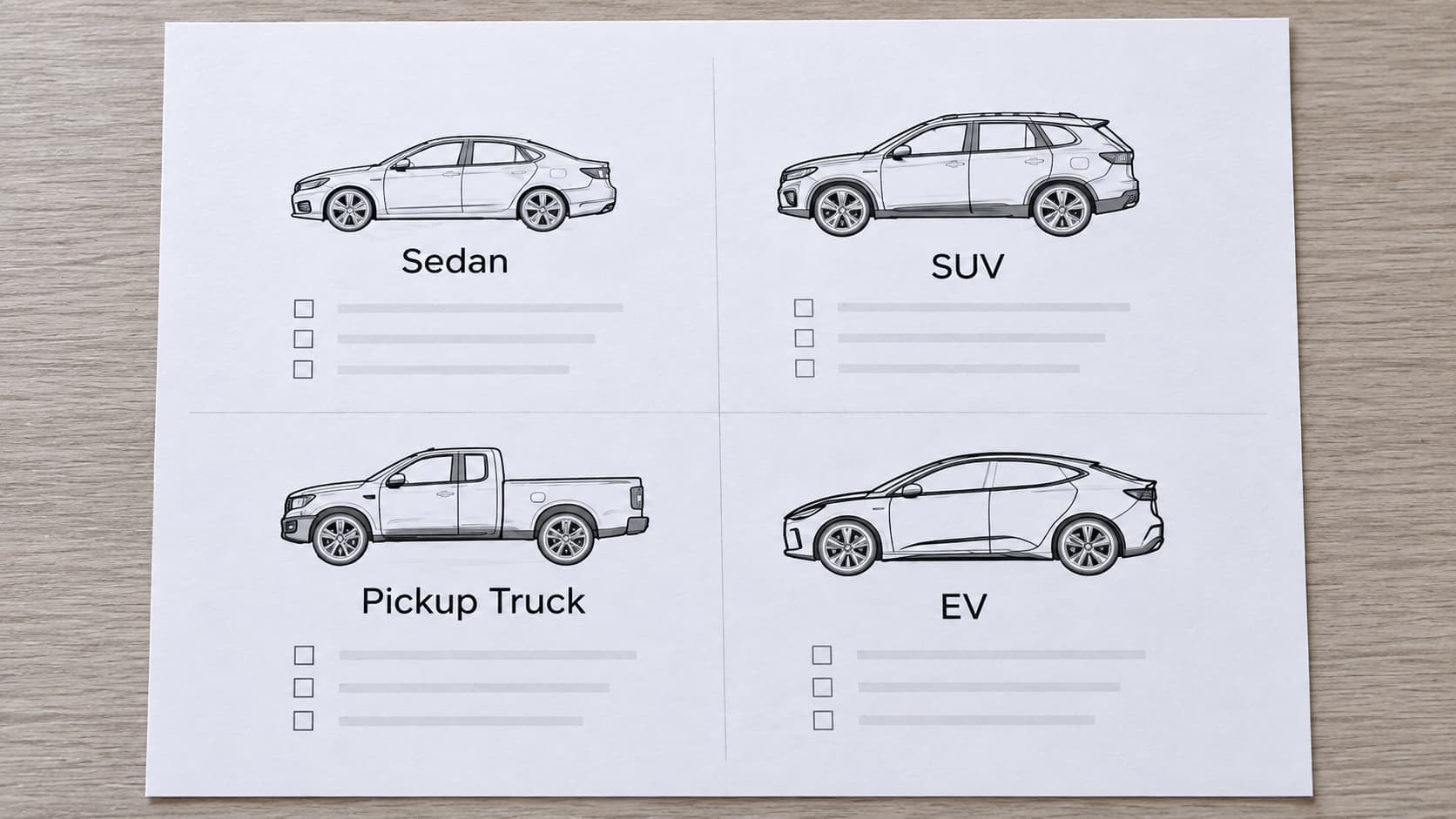
The vehicle you drive can have a noticeable effect on the price of full coverage car insurance.
A sedan, SUV, pickup truck, and electric vehicle can all carry similar types of coverage, but the cost to repair or replace each vehicle can be very different. Insurers may also consider the vehicle’s value, parts, technology, theft experience, and claims history when calculating a rate.
That is why two drivers asking for the same coverage limits and deductibles can see different prices based partly on the vehicles they drive.
Why Does Vehicle Type Matter for Full Coverage?
Full coverage car insurance commonly includes liability, collision, and comprehensive coverage.
Collision and comprehensive are especially connected to the vehicle itself because they can help pay for covered damage to the insured car. The potential cost to repair or replace that vehicle can therefore affect the price of carrying those coverages.
Insurers may look at factors such as:
- Vehicle value
- Repair costs
- Replacement parts
- Safety and driver-assistance technology
- Theft and claim history
- Vehicle age
- Trim and equipment
The vehicle class matters, but the specific vehicle usually has a greater influence on the quote.
Sedans: Toyota Camry
A midsize sedan such as the Toyota Camry provides a good example of why vehicle type is only the starting point.
Sedans are generally smaller than full-size SUVs and pickups, but that alone does not determine the insurance rate. The Camry’s model year, trim, value, parts, and technology can all affect the cost of comprehensive and collision coverage.
A newer Camry may also include cameras, sensors, and other driver-assistance equipment that can be involved in a repair after an accident.
Even within the same model, there can be differences. A newer or higher-trim Camry may have a different value and equipment than an older or more basic version.
What matters for full coverage: the value of the specific sedan, what it costs to repair, and the equipment included on that particular vehicle.
SUVs and Crossovers: Honda CR-V
Compact SUVs such as the Honda CR-V combine a larger body style with many of the features found in modern passenger cars.
When an insurer prices full coverage, the SUV label is only one piece of the picture. Vehicle value, repair costs, replacement parts, safety systems, and the specific model year can all affect the rate.
For example, newer SUVs may have cameras or sensors mounted around bumpers, mirrors, windshields, and other areas that can be affected during a collision.
That does not mean an SUV will automatically cost more to insure than a sedan. A basic compact SUV and a high-value sedan can produce very different quotes depending on the specific vehicles.
What matters for full coverage: vehicle value, body and parts costs, technology, and the individual model’s claims and loss history.
Pickup Trucks: Ford F-150
Pickup trucks show especially well why the exact vehicle matters.
Take the Ford F-150. Two F-150s can share the same model name while having very different trims, equipment, cab configurations, features, and vehicle values.
A more basic truck may look very different from a higher-end version when an insurer evaluates the potential cost of repairing or replacing it.
Larger exterior components, lighting systems, cameras, sensors, wheels, and other equipment can also affect repair costs after covered damage.
This is one reason it is important to quote the actual vehicle you plan to buy. Even when two vehicles are the same year, make, and model, changing the VIN can change an insurance quote because the insurer is evaluating the specific vehicle.
What matters for full coverage: trim, vehicle value, equipment, repair costs, and the exact truck being insured.
Electric Vehicles: Tesla Model Y
Electric vehicles add another set of vehicle-specific factors.
A Tesla Model Y, for example, uses a high-voltage electric powertrain along with extensive electronics and vehicle technology. EV repairs can also involve specialized parts, procedures, and repair facilities.
Factors such as vehicle value, specialized repairs, battery costs, parts availability, and access to qualified repair facilities can all influence the cost of insuring an electric vehicle.
That does not mean every electric vehicle will have the same insurance experience. EV models vary considerably in value, technology, parts, and repair costs just like gas-powered vehicles do.
What matters for full coverage: the EV’s value, specialized components, repair needs, technology, and parts availability.
Does Make and Model Matter as Much as Vehicle Type?
Yes. The specific make and model can be just as important as the broader vehicle category.
Collision and comprehensive insurance loss results can vary by make and model, even among vehicles in similar classes.
Think about two SUVs.
One might be an older compact crossover with a moderate current value. Another might be a newer luxury SUV with more expensive parts and technology. Both are SUVs, but the cost to repair or replace them can be very different.
The same idea applies to sedans and pickups.
This is why insurers generally need the exact year, make, model, trim, and VIN when providing the most accurate quote.
Does a Bigger Vehicle Always Mean a Higher Full Coverage Rate?
No.
Vehicle size by itself does not determine the price.
A pickup truck is not automatically more expensive to insure than every sedan, and an SUV is not automatically more expensive than every smaller vehicle.
A newer, higher-value sedan with expensive technology could produce a different full-coverage rate than an older pickup. Two SUVs can also have very different rates from each other.
It is better to think about the specific vehicle rather than assuming one entire category is always cheaper or more expensive.
What Vehicle Features Can Affect Full Coverage Rates?
When comparing vehicles, several characteristics can influence the comprehensive and collision portion of the insurance price.
Vehicle Value
A vehicle that costs more to replace can create a higher potential claim cost.
Repair Costs
Parts, materials, labor, and repair procedures can vary considerably between vehicles.
Technology
Cameras, sensors, advanced headlights, electronics, and driver-assistance systems can add complexity to certain repairs.
Parts Availability
Vehicles with readily available parts may have a different repair experience than models requiring specialized or harder-to-find components.
Theft and Claims Experience
Insurers can also consider historical claims and loss experience associated with particular makes and models.
Trim and Equipment
Moving from a base trim to a more heavily equipped version can change the vehicle’s value and the equipment being insured.
Check the Full Coverage Rate Before Choosing the Vehicle
Insurance is worth comparing alongside the purchase price when you are shopping for a car.
If you are deciding between a sedan, SUV, truck, or EV, getting a quote for each specific vehicle can show whether the insurance price changes before you make the purchase.
Use the actual year, make, model, trim, and VIN whenever possible. That gives the insurer more accurate information about the vehicle you are considering.
The biggest takeaway is simple: vehicle type can affect full coverage rates, but the exact vehicle matters more than the category alone.
A Toyota Camry, Honda CR-V, Ford F-150, and Tesla Model Y each bring different values, parts, technology, and repair considerations to a full-coverage quote. Even two versions of the same model may not produce the same price.
Before choosing your next vehicle, compare full-coverage quotes for the exact cars you are considering. Cheapest Auto Insurance can quote the year, make, model, trim, and VIN so you can see how the insurance price changes from one vehicle to another before you buy.