
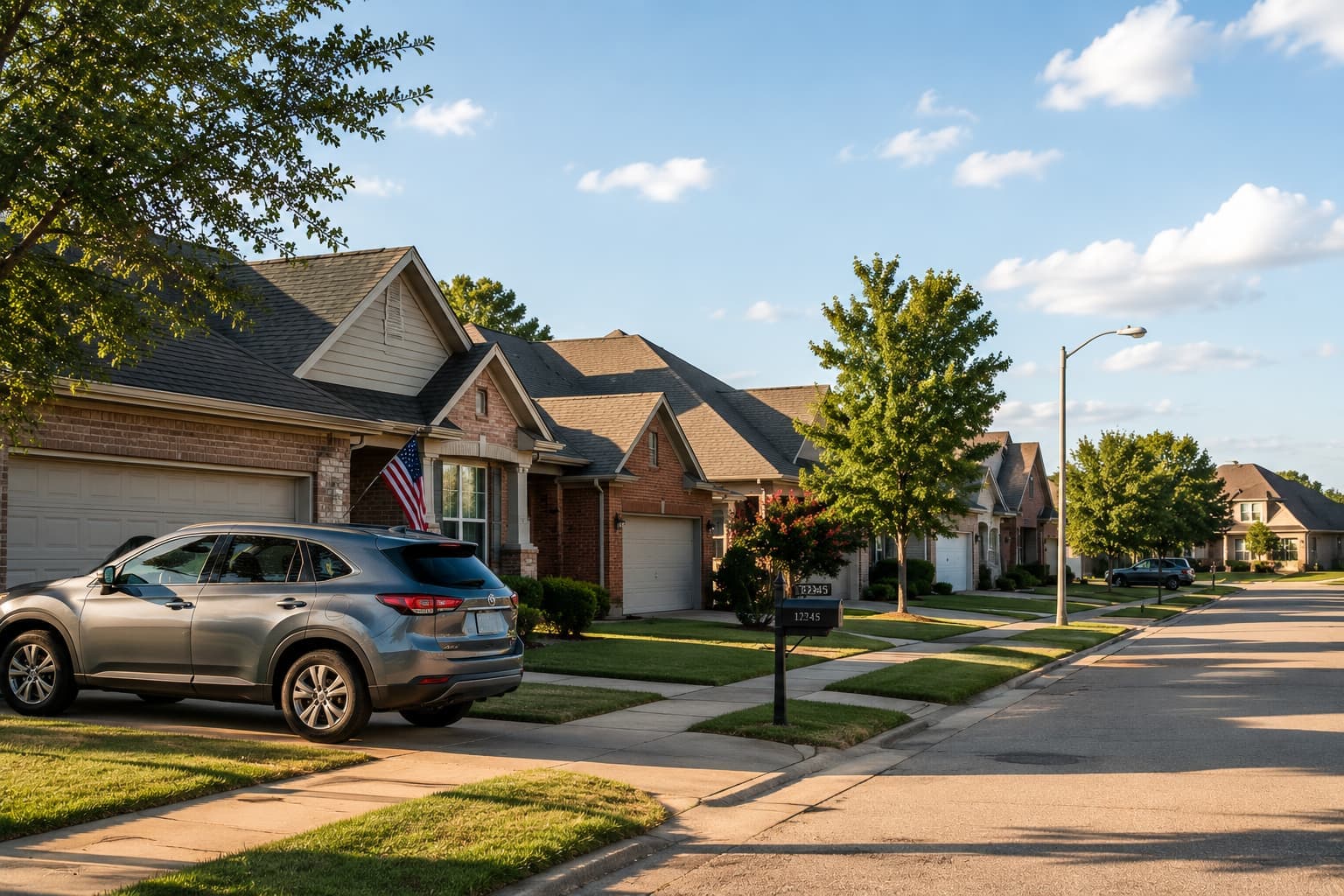
A typical Tulsa driveway holds a small fleet: the crossover that handles the school run, the full-size pickup that earns its keep towing a boat to Keystone Lake, and, under a cover along the fence, the motorcycle that comes out when Route 66 weather arrives. When it’s time to insure all of it, most people assume the deciding factor is what each machine is, that a truck needs “truck insurance,” that something as big as a three-row SUV must be a different category, that surely the bike can just be added on. The assumption feels logical, and it’s wrong in a way that matters: what decides the right policy for any machine is who owns it and how it’s driven, never its size or shape, and getting that match right is the difference between a claim that pays and a claim that gets complicated.
Two Questions Decide Everything
Personal automobile insurance, the same product whether a company calls it auto or car insurance, is defined by the word “personal,” and two questions test for it.
Who owns it? A vehicle owned or leased by a person belongs on a personal policy. A vehicle titled to a business does not, no matter how ordinary it looks; it needs commercial coverage, because the policy follows the title, not the paint job. This is why the question matters at quote time and not after a loss: an insurer discovering a business title during a claim is the worst possible moment for that detail to surface.
How is it driven? Commuting, errands, family life, weekends at the lake, all personal use, all at home on a personal automobile policy in Oklahoma. The reason this question exists is that use defines the risk being priced. A policy priced for a daily commute up US-169 is priced for exactly that, which is why answering it accurately protects you: coverage built on a wrong answer is coverage a claim can stumble over.
Pass both questions and the machine belongs on a personal auto policy. It’s genuinely that clean.
Why Size Never Disqualifies a Pickup or SUV
The doubt people feel about big vehicles comes from a real observation pointed at the wrong conclusion. A half-ton pickup does cost more to insure than a hatchback, but the reason is repair cost, not category. Both are private passenger vehicles in the policy’s eyes, along with sedans, minivans, crossovers, and SUVs, because eligibility runs on those two ownership-and-use questions while pricing on a larger vehicle simply reflects what its parts and panels cost.
The practical takeaway for a truck-heavy town: nobody in Tulsa needs to hunt for special “truck insurance” for a personally owned F-150, and any quote implying otherwise is dressing up the ordinary product. The boat trailer it tows is worth a direct question to your agent, since trailers have their own rules, but the truck itself is as standard as it gets.
The One Machine That Truly Needs Its Own Policy
The motorcycle is where the add-it-on assumption breaks. A bike fails an invisible third test, what the policy considers an “automobile” at all, so it can’t ride on the auto policy no matter who owns it or how it’s ridden. It takes its own policy type, priced around its own risks, and the practical side of setting up motorcycle coverage differs enough that it’s worth treating as its own small project rather than a checkbox. The good news is that separate never means inconvenient: auto and motorcycle policies sit side by side with the same agent, and a two-policy household is completely normal in a town with a seven-month riding season.
Getting the Match Right at Quote Time
All of this converts into about ninety seconds of accuracy when you set up or update a policy. Name every machine that needs coverage, say who holds each title, including leases, which count as personal, and describe honestly how each one is driven. Those answers let the agent put every vehicle on the policy type that will actually stand behind it, which is the entire point of the exercise. It’s the same conversation we have with Tulsa households every day at Cheapest Auto Insurance, usually wrapping up with the truck and the crossover on one auto policy and the bike on its own, everything matched, nothing assumed.
Which-Policy Questions Tulsa Drivers Ask
Does my pickup truck need different insurance than a car?
No. A personally owned light-duty pickup is a private passenger vehicle and belongs on a standard personal auto policy. Its size affects the premium through repair costs, never its eligibility.
Can I add my motorcycle to my automobile insurance?
No. Motorcycles aren’t automobiles in the policy’s definition and require their own policy type. Auto and motorcycle policies can be set up together with the same agent, but the bike can’t be a line item on the car policy.
My vehicle is leased, not owned. Which policy does it go on?
A personal one. Leased vehicles count as personally held for policy purposes, and the leasing company’s coverage requirements are written into the lease, so have those terms handy at quote time.
What if my vehicle is titled to my business?
A business-titled vehicle needs a commercial policy, even if it looks and drives like any family vehicle. The policy follows the title, and disclosing it up front keeps future claims clean.